The one number to check before you stock
A crowded category can look like proof of demand. It isn't. Before you stock a product for a new market, check one number: sell-through rate.
What it is
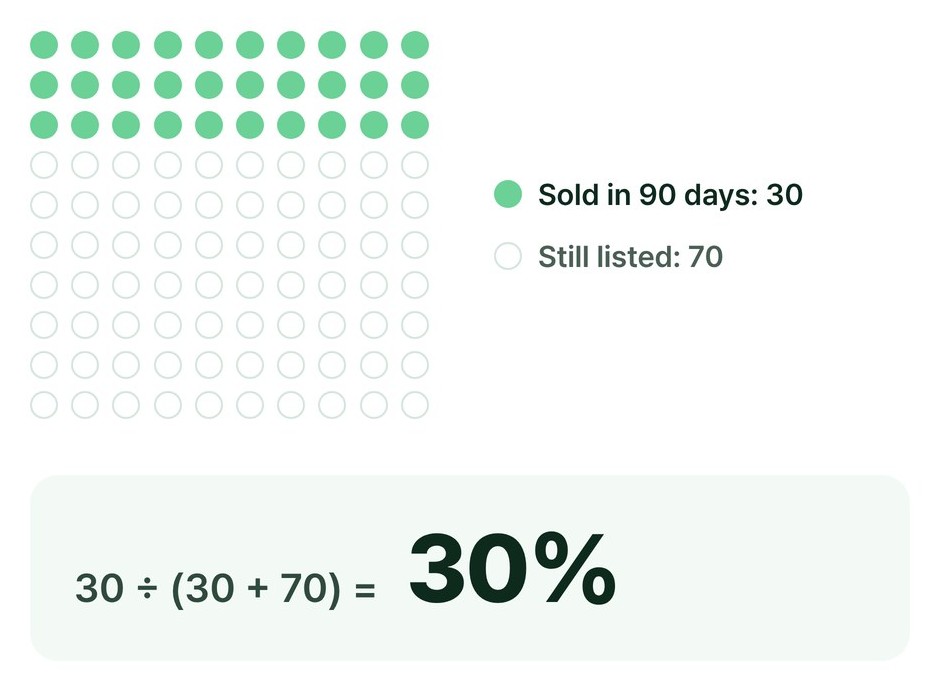
Sell-through rate = units sold ÷ (units sold + units still listed). It shows how much of what's listed actually sells, not just how many sellers there are.
Where to get the numbers
Use the sales data your marketplace or research tool already shows. Count units sold over a set period, such as the last 90 days, and units still listed right now. Same product, same market, same time window.
Example
30 sold in 90 days and 70 still listed: 30 ÷ (30 + 70) = 30%. These are illustrative numbers.
3 ways this number can mislead you
- The time frames don't match. "Sold" counts the last 90 days. "Listed" counts only today.
- One listing, many units. A listing may hold 50 units, but it counts as one.
- Listings that never sell. Overpriced items sitting for months still count as "listed."
A high rate means it sells. It doesn't tell you the price. Check sold prices too.
Compare before you choose
Run the same check across countries and marketplaces before deciding where to launch. Start where it already sells.